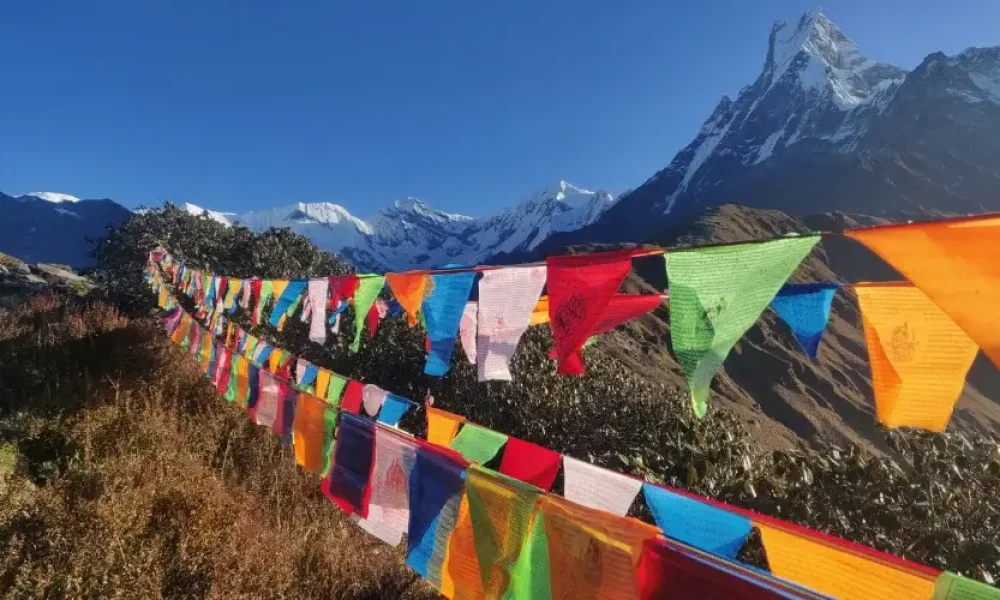
Trekking through the Himalayas, visitors are often mesmerized by the fluttering symphony of colorful rectangular cloths strung high above monasteries, across mountain passes, and adorning humble homes. These are Tibetan Prayer Flags (Lung Ta in Tibetan, meaning “Wind Horse”), and they are one of the most iconic symbols of Himalayan culture and spirituality.
More Than Decoration
The flags are not merely decorative. They are an ancient form of prayer and blessing. Unlike Western tradition where flags mark ownership or country, prayer flags are not meant to hang forever. Their purpose is to fade, tear, and slowly decompose.
- The Text: The flags are inscribed with sacred texts, mantras (like Om Mani Padme Hum), and powerful symbols, including the Wind Horse itself.
- The Intention: The prayers and mantras are not whispered into the air by the person who hangs the flag. Instead, the wind catches the flags, wearing down the printing, and carries the prayers, well-wishes, and compassion out into the world.
- The Colors: Each of the five colors represents an element and a state of being:
- Blue: Sky/Space (Wisdom)
- White: Air/Wind (Purity)
- Red: Fire (Life Force/Preservation)
- Green: Water (Compassion)
- Yellow: Earth (Rootedness)
New Flags, New Beginnings
It is considered good fortune to hang new flags on a clear, auspicious day (often a Monday or Friday) and bad fortune to hang them on specific unlucky dates. When flags are old and tattered, they are traditionally taken down and burned—not as a sign of disrespect, but as a symbolic offering to the world, ensuring the prayers continue their journey.
These beautiful, weathered banners are a powerful reminder of the enduring faith and connection to nature that defines the life of the mountain people.